
Sweet Science: Understanding Technical Sugars
- Posted on
- By The Pastry Depot
- 0
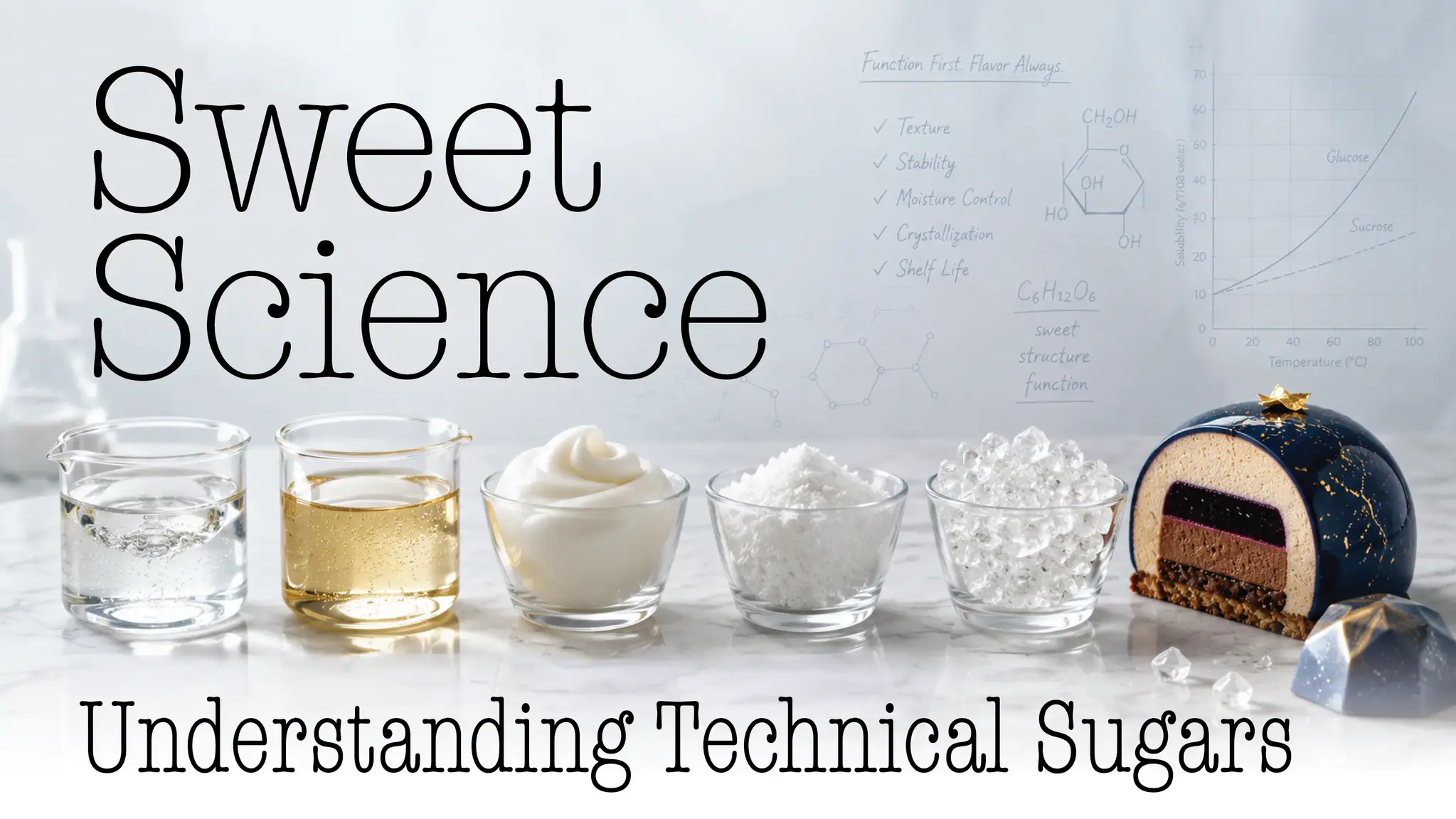
Let our guide to trehalose, glucose powder, glucose syrup, dextrose, trimoline, and sorbitol help you find the sugar that’s best for your preparations!
Technical sugars may sound intimidating, but they are some of the most helpful tools in pastry, chocolate, confectionery, and frozen desserts. Learn how trehalose, glucose powder, glucose syrup, dextrose, trimoline, and sorbitol help control sweetness, texture, moisture, stability, and shelf life.
Beyond the Sweetness
In pastry, chocolate work, ice cream, and confectionery, sugar does a lot more than simply make things sweet. The right sugar can help control texture, moisture, softness, shelf life, freezing behavior, crystallization, and even how clearly a flavor comes through.
That is where technical sugars come in.
While traditional sucrose, or table sugar, is still an essential ingredient, technical sugars give chefs, chocolatiers, bakers, and makers more control. They can help keep sorbets scoopable, ganache smooth, caramels soft, fruit fillings bright, and bonbon fillings stable.
If you have ever wondered why one frozen dessert feels creamy instead of icy, or why one ganache stays beautifully soft while another becomes firm or grainy, there is a good chance technical sugars are part of the answer.
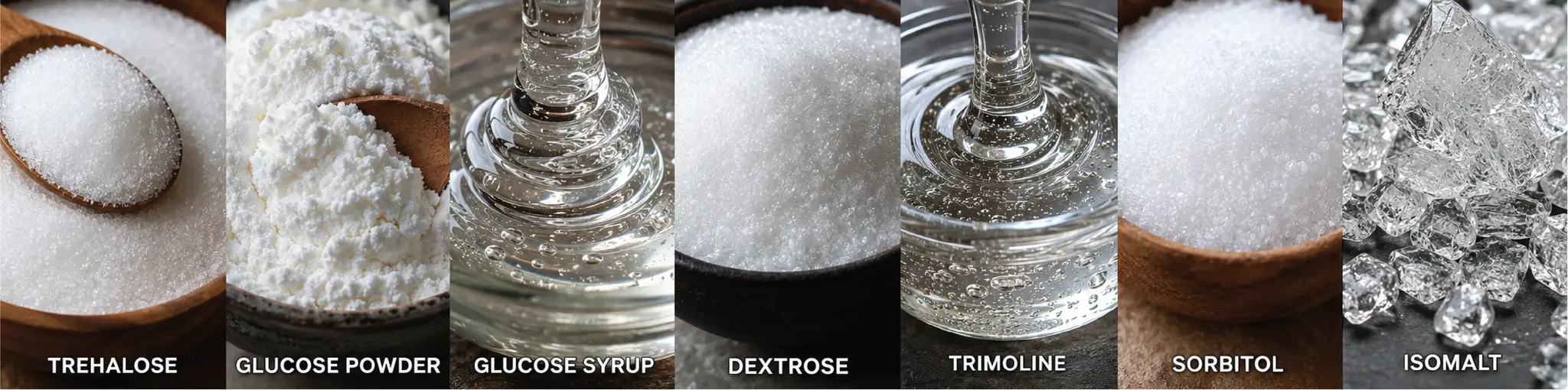
Below, we are breaking down six of the most widely used technical sugars: trehalose, glucose powder, glucose syrup, dextrose, invert sugar, and sorbitol, as well as another useful sugar – isomalt.
Trehalose
Trehalose is a naturally occurring disaccharide found in mushrooms, yeast, and some plants. In pastry and chocolate work, it is especially valued for its low sweetness. Trehalose is only about 45% as sweet as sucrose, which makes it helpful when you want structure and stability without making the finished product overly sweet. It supports smoother texture in sorbets, gelato, and frozen desserts, while also helping preserve bright, fresh flavors in fruit purees and ganache. Additionally, trehalose can help reduce water activity in chocolate fillings without adding too much sweetness.
COMMON USAGE RATIOS
- Ice cream and sorbet: 3-8% of total preparation
- Ganache: 5-10% of sugar weight
- Fruit preparations: 2-6% for stabilization
IDEAL APPLICATIONS
- Shelf-stable bonbon fillings
- Sorbets and gelato with clean, bright flavor
- Citrus, berry, herbal, and fruit-forward desserts
- Ganache where sweetness control is important
Glucose Powder
Glucose powder, also called dried glucose syrup, is a low-sweetness sugar derived from starch. It is typically only about 20-30% as sweet as sucrose, which makes it useful when you need body, chew, or stability without adding too much sweetness. In confectionery, glucose powder helps interfere with crystallization, creating smoother textures in caramels, nougat, marshmallows, pate de fruit, and sugar work. Glucose powder provides structure without overpowering sweetness and helps bind water for better stability.
COMMON USAGE RATIOS
- Caramels and nougat: 5-20% of total sugar weight
- Sugar work and pulled sugar: up to 20% to help prevent crystallization
- Ganache: 2-6% for added stability
IDEAL APPLICATIONS
- Caramels and fudges
- Nougat, marshmallows, and pate de fruit
- Sugar work that needs to stay smooth and shiny
- Confections where crystallization control is essential
Glucose Syrup
Glucose syrup is a thick, liquid syrup made from starch. Like glucose powder, it is used to control crystallization, add body, improve texture, and support shelf-life stability. The biggest difference is that glucose syrup already contains water, while glucose powder is dried. Because it is liquid, glucose syrup blends easily into recipes to help prevent crystallization in candies, caramels, and fillings, or add chew, flexibility, and smooth texture. It also helps retain moisture and improve shelf-life stability, and adds shine and elasticity to glazes, fillings, and confections.
COMMON USAGE RATIOS
- Caramels and nougat: 5-25% of total sugar weight
- Ganache: 3-8% for smoothness and moisture control
- Pate de fruit and fruit gels: 5-15% for texture and crystallization control
- Glazes: varies by formula, often used for shine and elasticity
IDEAL APPLICATIONS
- Caramels, nougat, and marshmallows
- Ganache and bonbon fillings
- Pate de fruit and fruit gels
- Sugar work and pulled sugar
- Glazes, mirror glazes, and shiny finishes
Glucose Syrup vs. Glucose Powder
Glucose syrup and glucose powder are closely related, but they are not always interchangeable one-for-one.
Glucose Syrup is best when you want moisture, flexibility, softness, and easy incorporation. Since it is already liquid, it is especially helpful in caramels, ganache, marshmallows, glazes, and recipes where smooth texture is a priority.
Glucose Powder is best when you want the functional benefits of glucose without adding extra water. It is helpful in formulas where the water content needs to be carefully controlled, such as dry mixes, certain confectionery recipes, chocolate work, and applications where precision matters.
A simple way to think about it:
Use glucose syrup when you want softness, chew, moisture, and easy mixing. Use glucose powder when you want structure, stability, and lower water content.
In professional recipes, the choice often comes down to formula balance. Glucose syrup contributes both sugar solids and water, while glucose powder contributes mostly solids. That means switching between the two may require adjusting the liquid in the recipe.
Dextrose
Dextrose is pure glucose, a simple sugar that is about 70% as sweet as sucrose. It is more hygroscopic than regular sugar, meaning it attracts and holds moisture for better texture. Dextrose has a strong effect on freezing point, which makes it especially valuable in frozen desserts. In ice cream, gelato, and sorbet, dextrose helps keep the finished dessert softer and easier to scoop without pushing sweetness too far. Dextrose can reduce overall sweetness while maintaining solids and also supports browning in baked goods.
COMMON USAGE RATIOS
- Ice cream and sorbet: 5-12% of total mix
- Bakery applications: 2-5% to improve browning
- Ganache: 2-4% for moisture control
IDEAL APPLICATIONS
- Gelato, sorbet, and ice cream
- Low-sweetness frozen desserts
- Baked goods that need improved color or moisture retention
- Recipes where freezing point control matters
Trimoline / Invert Sugar
Trimoline is a brand name for invert sugar paste. Invert sugar is made by breaking sucrose into glucose and fructose. It is approximately 120% as sweet as sucrose and is highly hygroscopic, making it excellent at attracting and retaining moisture and texture in products like cakes, pastries, ganache, and caramels. Trimoline is especially useful when softness, elasticity, smoothness, and crystallization control matter, like in confections and fillings. The use of invert sugar can also result in a longer shelf life through moisture control.
COMMON USAGE RATIOS
- Ganache: 5-10% of total sugar
- Caramels: 3-8% to improve smoothness
- Cakes and pastries: 2-6% for moisture retention
IDEAL APPLICATIONS
- Ganache and bonbon fillings
- Caramels, fudges, and pate de fruit
- Cakes and pastries that need extended softness
- Recipes where smooth texture and moisture retention are key
FUN FACT: Did you know Honey is a natural form of Invert Sugar? Honey is a natural invert sugar because bees transform the sucrose found in flower nectar into the simple sugars glucose and fructose. When worker bees collect nectar, they add enzymes from their saliva, primarily invertase, which begins breaking down the sucrose into two simple sugar components. During this process, the bees repeatedly pass the nectar between one another and store it in the honeycomb, where moisture is reduced through evaporation. As the water content decreases and the enzymatic conversion continues, the nectar thickens into honey rich in glucose and fructose. This natural inversion process gives honey its smooth texture, moisture-retaining properties, resistance to crystallization, and ability to enhance shelf life and softness in baked goods and confections.
This makes honey especially valuable in baking and pastry applications, where it contributes to softer textures, extended shelf life, improved browning, and enhanced flavor. Its natural invert sugar properties also make honey an excellent ingredient for candies, ice creams, ganaches, and other desserts requiring stability and moisture retention when Trimoline cannot be found.
Sorbitol
Sorbitol is a sugar alcohol, not a traditional sugar, and is about 60% as sweet as sucrose. It is prized for its strong moisture-binding capacity and its ability to crystallize very slowly, maintaining smooth texture and softness without adding too much sweetness. In pastry and chocolate work, sorbitol is often used when moisture control is important in products like ganache and pate de fruits, but extra sweetness is not desired. Sorbitol’s reduction in water activity also supports longevity in shelf-stable fillings.
COMMON USAGE RATIOS
- Ganache: 3-8% of total weight
- Low-sugar baking: 5-15%
- Pate de fruit and fruit gels: 2-5% for texture control
IDEAL APPLICATIONS
- Bonbon fillings requiring longer shelf life
- Ganache and chocolate centers
- Pate de fruit and smooth fruit gels
- Low-sugar or reduced-sugar pastry applications
Choosing the Right Technical Sugar
Each technical sugar brings something different to the recipe. The key is knowing what problem you are trying to solve.
Need less sweetness but better structure?
Trehalose may be the right fit.
Trying to keep caramels smooth and prevent crystallization?
Glucose powder or glucose syrup can help.
Making sorbet or gelato that needs to stay scoopable?
Dextrose is often one of the most useful tools.
Need moisture retention and a softer texture in ganache or bonbon fillings?
Trimoline or sorbitol may be the better choice.
Honorable Mention: Isomalt
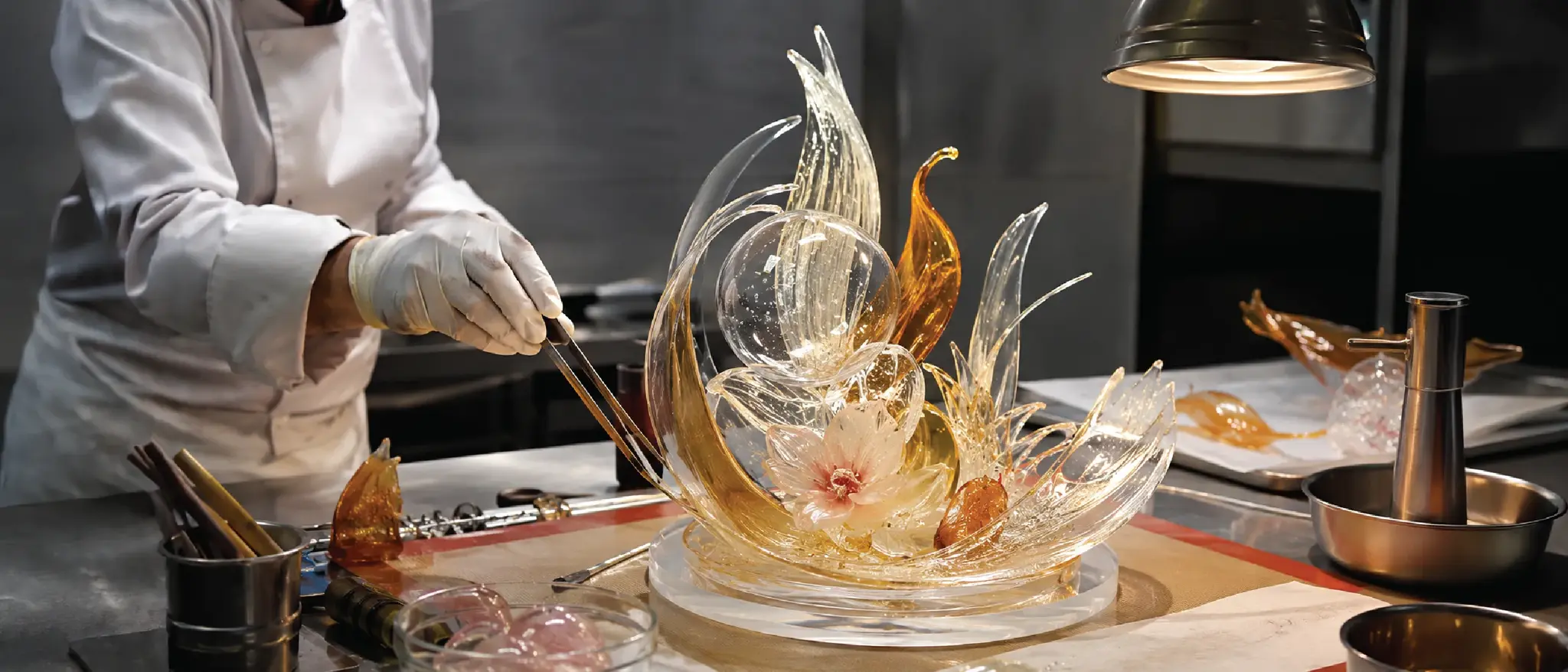
While some technical sugars are used primarily for texture and shelf-life control, others — like isomalt — are valued for decorative and artistic applications. Isomalt is a sugar substitute derived from beet sugar that is widely used in pastry and confectionery for decorative sugar work. Unlike traditional sucrose, isomalt is more resistant to humidity and crystallization, making it easier to work with for pulled sugar, blown sugar, cast decorations, and showpieces. It also melts very clear, allowing pastry chefs to create glossy, glass-like finishes and vibrant colored sugar décor.
Isomalt is easier to work with for pulled and blown sugar applications. Because of its improved stability, isomalt is often preferred over regular sugar for display work and decorative elements that need to hold their shape longer in warmer or more humid environments. Isomalt is also useful for display pieces because it reduces unwanted crystallization and cloudiness, creating clear, glossy sugar décor and “glass” effect.
COMMON USAGE RATIOS
- Pulled and blown sugar: often used as the primary sugar base
- Cast sugar décor: varies by application
- Decorative garnishes and showpieces: used as needed for structure and stability
IDEAL APPLICATIONS
- Pulled sugar ribbons and spirals
- Blown sugar décor and showpieces
- Sugar sails, shards, and edible glass effects
- Molded sugar décor and cake toppers
- Decorative pastry and plated dessert elements
Bringing It All Together
Technical sugars may seem complicated at first, but they are really about control. They help pastry professionals and serious bakers fine-tune sweetness, texture, moisture, freezing behavior, crystallization, and shelf life.
Whether you are creating a smooth bonbon filling, a bright fruit sorbet, a soft caramel, or a pastry that stays moist longer, understanding how these sugars work can make your recipes more consistent and more refined.
In other words, technical sugars are not just extra ingredients. They are problem-solving tools - and once you understand what each one does, they can completely change the way you approach pastry, chocolate, and confectionery.
Comments
Be the first to comment...